
Concrete Quality Begins with Testing
We transform test results into accurate engineering indicators that support design and execution decisions and reveal the integrity of concrete elements.
Concrete Testing
Accurate Tests Ensure Concrete Strength and Safety
At Pro Lab, we provide a comprehensive range of field and laboratory concrete tests covering all stages of concrete, from approving raw materials and concrete mixes, and monitoring on-site casting operations, to evaluating and assessing hardened concrete to verify its structural efficiency and quality.
Reliable results and clear technical reports that help you evaluate concrete strength, verify its quality and compliance with specifications, and reduce the risks of cracking and poor performance
Scope of Concrete Testing Services
First: Fresh Concrete Testing (Fresh Concrete Testing)
Slump Test
Measuring concrete consistency and workability on site before starting casting operations.
Concrete Temperature Test
Measuring the temperature of fresh concrete to ensure compliance with specifications and prevent thermal cracking.
Sampling
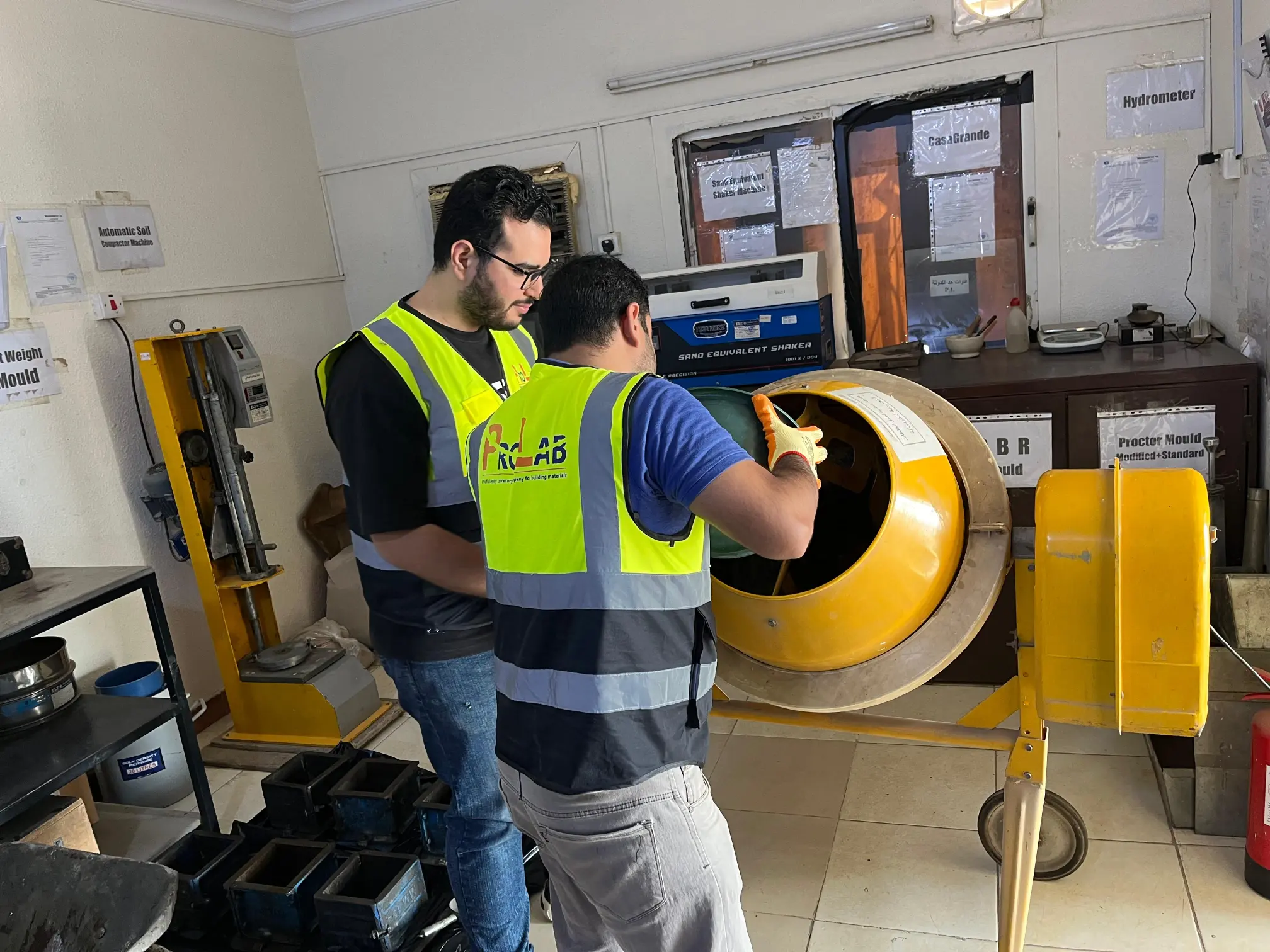
Taking fresh concrete samples and casting them into cubes or cylinders according to standard requirements, then curing them in the laboratory for testing and verifying the quality of the cast concrete.
Supervision and monitoring of casting
Providing field quality control and quality assurance services during concrete casting operations on site.
Second: Hardened Concrete Testing (Hardened Concrete Testing)
Compressive Strength Test
Performing compressive strength tests on concrete cubes and cylinders to determine the actual compressive strength of the concrete.
Concrete Core Test
Evaluating and comparing the actual compressive strength of concrete by subjecting extracted core samples to direct laboratory testing.
Schmidt Hammer Test
One of the most prominent rapid field tests used to evaluate concrete surface hardness, providing an immediate and approximate indication of the compressive strength of structural elements on site.
Ultrasonic Pulse Velocity
Accurately detecting internal voids, honeycombing, and hidden cracks, and evaluating the overall concrete quality without causing any damage to the structural element.
Rebar Scanning
Detecting and locating reinforcement bars, determining their diameters and distribution, in addition to measuring concrete cover thickness (Concrete Cover) using the latest advanced equipment.
Carbonation Depth Test
Measuring the depth of carbonation within the concrete element to determine concrete quality and assess the reduction in alkalinity surrounding the reinforcement steel.
Half-Cell Potential Test
A non-destructive field test used to measure the probability of active corrosion and rust presence in reinforcement steel within concrete structures.
Chemical Analysis
Including the determination of chloride, sulfate, and pH levels in concrete samples to evaluate the extent of concrete deterioration caused by salts and environmental factors.
Concrete Products Testing
Conducting the necessary physical and mechanical tests for precast building units to determine compressive strength, flexural strength, and water absorption rates for concrete blocks, interlock tiles, and curbstones, ensuring their quality and compliance with standard specifications.
Photo Gallery
Before Concrete Casting and During Execution
Ensure Concrete Quality Before Approval
Concrete testing helps you verify its strength, quality, and compliance with technical specifications, whether for fresh or hardened concrete.Share your project details with us, and the ProLab team will determine the appropriate tests to evaluate the integrity of concrete elements, detect any deficiencies at an early stage, and support execution decisions with accurate and reliable results.
عندما يتغير شكل المبنى… يجب أن نقرأ حالته فنيًا
التقييم الإنشائي للمباني القائمة مناسب عند ظهور شروخ، هبوط، تلف، أو عند الحاجة إلى فحص المبنى قبل الترميم أو التدعيم أو الشراء أو إعادة الاستخدام.

افهم حالة المبنى قبل اتخاذ القرار
معاينة فنية، اختبارات ميدانية، تحليل للنتائج، وتوصيات تساعدك على تحديد الخطوة المناسبة.
من ملاحظة العيب إلى القرار الفني
المعاينة
رصد الشروخ والعيوب وتوثيق أماكن التلف والعناصر المتأثرة.
الاختبارات
تنفيذ اختبارات NDT أو الكور الخرساني حسب حالة المبنى.
التحليل
قراءة النتائج وربطها بالحالة الظاهرة والعناصر الإنشائية.
التقرير
إعداد تقرير فني يتضمن التوصيات المناسبة للإصلاح أو التدعيم.
فحص متكامل يساعدك على فهم الحالة الفعلية للمبنى
يتم تحديد نطاق التقييم والاختبارات المناسبة بناءً على حالة المبنى، نوع العيوب، عمر المنشأ، والغرض من الفحص.
الهدف ليس تقديم أرقام فقط، بل تحويل النتائج إلى توصية هندسية واضحة تساعدك على اتخاذ القرار الصحيح.
قبل اتخاذ قرار مكلف يتعلق بالمبنى
عند ظهور شروخ أو هبوط
لتحديد سبب العيب ومدى تأثيره على المبنى.
قبل الترميم أو التدعيم
لتحديد نوع التدخل الفني المطلوب قبل التنفيذ.
قبل شراء مبنى قائم
لفهم الحالة الإنشائية قبل اتخاذ قرار الشراء.
قبل التعديل أو إعادة الاستخدام
لدراسة مدى ملاءمة المبنى للاستخدام الجديد.